
What Is Returned Mail and How Can You Reduce It?
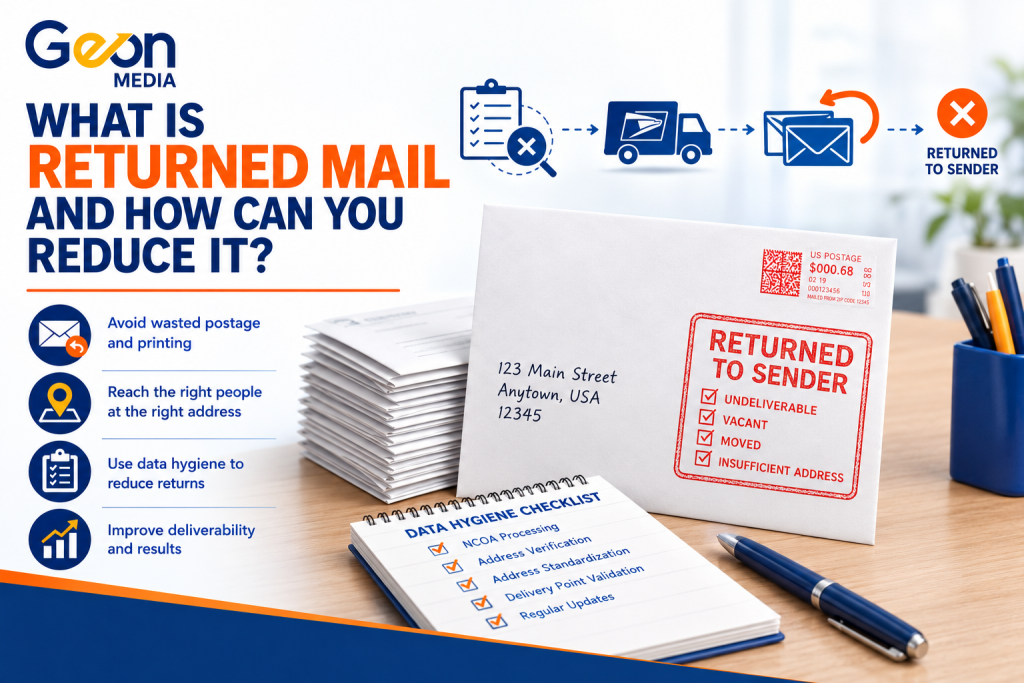
Key Takeaways
- Returned mail is mail that is sent back to its sender due to the USPS not being able to deliver it to the mail piece that was provided.
- Reasons that mail could be deemed undeliverable include incomplete/incorrect addresses, the recipient on the mail having moved, vacant addresses, and more.
- Having a proper data hygiene routine that is performed on a regular basis can help reduce returned mail.
- Not every piece of mail that isn’t delivered is returned to sender. What happens to undeliverable mail depends on the mail class, services, and endorsements that are used to mail.
Introduction
After you’ve printed a piece of mail and paid for postage, it can be frustrating to see the piece of mail back in your possession due to being returned to sender. There are various reasons that mail could be returned to sender, and while there are no ways to entirely eliminate receiving returned mail, there are ways to minimize it.
What Is Returned Mail?
Returned mail is mail that the USPS is unable to deliver as addressed and is sent back to the sender. The USPS uses the term “Undeliverable-as-Addressed” (UAA) for any mail that isn’t able to be delivered as addressed. Depending on the class of mail that is used, UAA mail could be forwarded to the recipient, returned to sender, disposed of, or otherwise handled by the USPS.
Why Does Mail Get Returned or Become Undeliverable?
There are many reasons why mail might not be delivered.
The Recipient Moved
If the person that is trying to be reached doesn’t reside at the listed address, the mail might not reach them at that address. Depending on the mail class that was used to mail and other circumstances, it might be forwarded, returned, disposed, or otherwise handled by the USPS.
Incorrect/Incomplete Address
If an address is incorrect or incomplete, the mail piece will be prevented from being successfully delivered. This could happen if the apartment information is omitted, the ZIP Code being wrong, the street is missing or misspelled, and other reasons.
Lack of a Valid Delivery Point
While an address could look correct, if the address isn’t a valid delivery point, it could create a delivery issue. Delivery Point Validation (DPV) can be used to determine if an address corresponds to a known USPS delivery point.
Address is Vacant
While the physical address exists and is a valid delivery point, the address might lead to a vacant building without anybody occupying it.
Why Is Returned Mail a Problem?
Returned mail implies that the mail had been printed and mailed and then returned, meaning that the printing and postage for that mail was wasted. There is also an opportunity cost attached to each returned piece of mail, as the intended recipient didn’t receive the offer. Mailers should try to reduce returned mail that they receive.
Is All Undeliverable Mail Returned to Sender?
No. While mail could be returned to sender, what happens to the mail depends on the chosen mail class and any service standards or endorsements. According to the USPS Special Address Services, First-Class Mail is usually returned, while USPS Marketing Mail is generally disposed of instead of being returned.
How Can I Reduce Returned Mail?
Update Your Mailing Information
One of the best ways to reduce returned mail is by performing proper data hygiene and cleaning your database or mailing lists regularly can reduce the amount of mail that gets returned, as you can eliminate some of the reasons that mail might get returned that was mentioned above.
Utilize NCOA Processing
National Change of Address (NCOA) processing can help to identify if there are any applicable address changes for people or businesses that have filed a change of address with the USPS. This can help to reduce returned mail.
Confirm Your Mailing Addresses
Address verification can help in determining if the addresses in your mailing data are able to be appropriately matched or otherwise recognized using postal information.
Standardize Your Mailing Addresses
Another way to reduce returned mail that you receive is by using address standardization. Address standardization puts address data into a consistent, uniform, USPS-compatible format that can help with address matching and other processing. This can be helpful, as if your mailing list is composed of multiple data sources, they might be using a different format for their address data.
Use Delivery Point Validation
Delivery Point Validation (DPV) can help in determining if the addresses that you have the information for are accurate, valid delivery points that USPS can deliver to, which can reduce returned mail.
Use Merge/Purge
Merge/purge is the process of combining multiple mailing lists/databases and removing the duplicate names and entries once they’ve been merged.
Upgrade Your Data Hygiene Processes
As time passes, data is going to become outdated naturally, and unless you use multiple processes for your data hygiene, you won’t reduce returned mail that you get. Due to this, making sure that you have the most up to date and relevant data and updating your databases and mailing lists, a process called data hygiene, can help with reducing the volume of returned mail. It’s not enough to simply run your information through one process and stop your data hygiene routine at that spot.
What Do I Do with Mail That Gets Returned?
While you might be trying to reduce returned mail, you still will receive it. There isn’t a one-size-fits-all process for returned mail. The returned mail should be analyzed to see why the mail was returned and try to correct it. If updated, more reliable information is available, it’s recommended that the mailer considers updating their information, especially if the individual could be mailed to again in a future direct mail campaign. If the amount of returned mail increases, then looking at upgrading your data hygiene processes could also be a wise idea.
When Should I Clean My Mailing Data?
Ideally, your data should be cleaned before your mail has been printed. Once mail has been printed, personalized, and mailed, then the campaign manager has already incurred those expenses. Catching any bad addresses or other data before any printing has happened could potentially save the campaign manager money on producing and mailing any undeliverable mail, which can help reduce returned mail that you get.
Can I Entirely Eliminate Receiving Returned Mail?
While having a good data hygiene routine can help in trying to reduce returned mail that you receive, there is no way to guarantee that all mail that has been returned or is deemed undeliverable will be eliminated. People move on a daily basis, information changes, and it isn’t possible to keep up with it all.
FAQ
- Q: Does every piece of undeliverable mail get returned to the sender?
- A: No, not every piece is returned. There are various factors that go into determining where the mail goes, including its mail class and other applicable USPS services and endorsements.
- Q: Should every piece of returned mail have its destination removed from a mailing list?
- A: Not necessarily. The reason that the mail was returned in the first-place matters. The record should be reviewed and then updated, corrected, flagged, suppressed, or otherwise handled.
- Q: Could mail going to a valid address be returned?
- A: Yes. Having a valid address isn’t a guarantee that the mail will be delivered successfully. For example, an address that is accurate might be vacant, the addressee might not live at the address, or other circumstances could arise that prevent delivery.
- Q: Does performing proper data hygiene completely remove receiving returned mail?
- A: No. While having a good data hygiene routine can help in reducing the amount of returned and undeliverable mail, there isn’t any process that can completely eliminate all returned or undeliverable mail.
Conclusion
Receiving mail that was returned to you due to being undeliverable is a frustrating part of the direct mail process that cannot be entirely eliminated. However, it is possible to minimize the amount of mail that is returned by having a data hygiene process that is performed often to find, update, correct, or suppress bad information contained within your mailing data.
If you need assistance with performing data hygiene or cleaning a mailing list, database, or other data source, contact Geon today, and we would love to help.
Return to Analyzing Your Campaign Results, or browse Geon’s Learning Center.
Recent Comments