
What Happens After Mail Is Dropped Off at USPS?
Key Takeaways
- Once your mailing is dropped off at USPS, your mail enters the postal network for processing, sorting, and transportation before ultimately being delivered.
- The USPS has automated equipment and information, such as the address and Intelligent Mail barcode to help with the processing and routing of qualifying mail.
- The exact path that a mail piece takes to arrive to its recipient depends on the mail piece’s origin, mail class, destination, and where it is entered into the USPS network.
- The USPS offers various visibility tools that can help provide information about the mail as it’s processed, but these tools shouldn’t be treated as proof of the mail’s final delivery.
Introduction
You have designed your mail piece, rented your mailing list, and had your mail printed, addressed, and presorted. You’re ready to hand off your mail to the USPS. What happens after mail is dropped off at USPS? Your thousands of pieces of mail don’t just immediately leave the post office and travel to its recipient, the USPS has to process, sort, transport, and deliver the mail. While this article gives an overview of the USPS process, the exact steps and route won’t be the same for every piece of mail that you give the USPS.
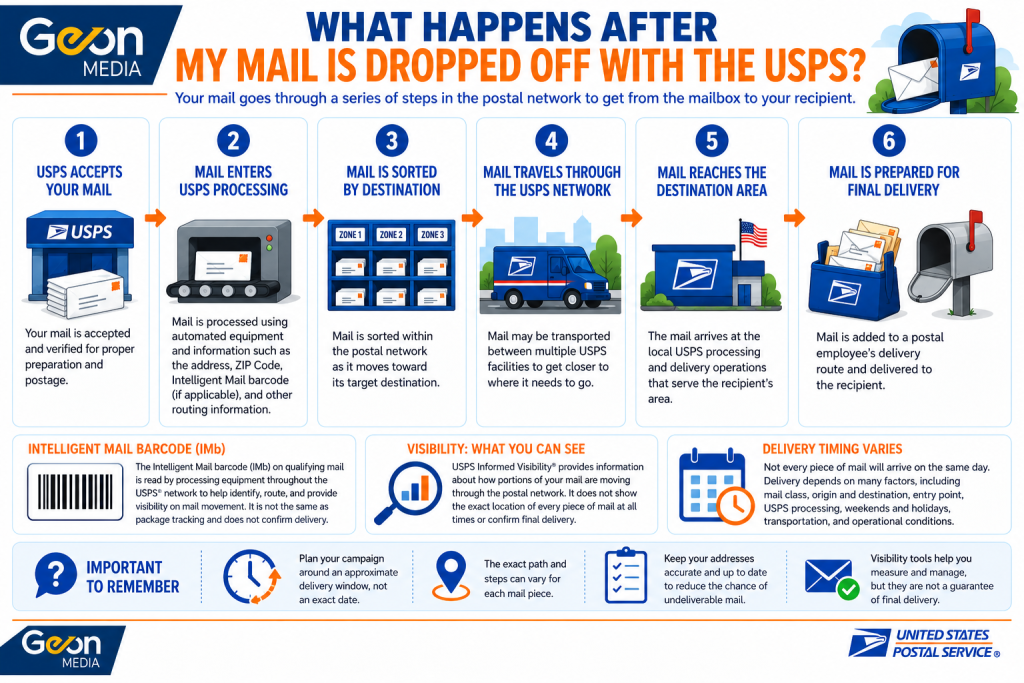
Step 1: USPS Accepts Your Mail
The first step that a mail piece takes after it’s sorted and prepared is handing off the mail to the USPS after it has been accepted and verified of its preparation and postage.
Step 2: The Mail Enters USPS Processing
The mail then goes through USPS processing. Depending on the mail and how it was prepared, the mail is processed, sometimes using automated machinery, to determine where it needs to go.
The processing phase could use information from your mail piece’s:
- Delivery address
- ZIP Code
- Intelligent Mail barcode (if applicable)
- Other preparation and routing information
Step 3: Mail Is Sorted by Destination
While your mail could have already been presorted before it was given to the USPS, the sorting phase involves processing the mail through the postal network as it moves towards its target destination.
Step 4: Mail Travels Through the USPS Network
Once the mail has been sorted towards its target destination, the mail might need to be transported between multiple USPS facilities to move closer to where it needs to go. Mail can also be transported closer to its target destination before entering the USPS network, which is known as drop shipping your mail.
Step 5: Mail Reaches the Destination Area
As the mail piece gets closer to its target destination, it will reach the appropriate USPS processing and delivery operations that serve its recipient’s area.
Step 6: Mail Is Prepared for Final Delivery
The mail will then be prepared and added to a postal employee’s delivery route. That is when the mail will be delivered to the recipient.
Again, this isn’t a universal process for every piece of mail, this is just a general overview of how the process works.
Intelligent Mail Barcode Usage
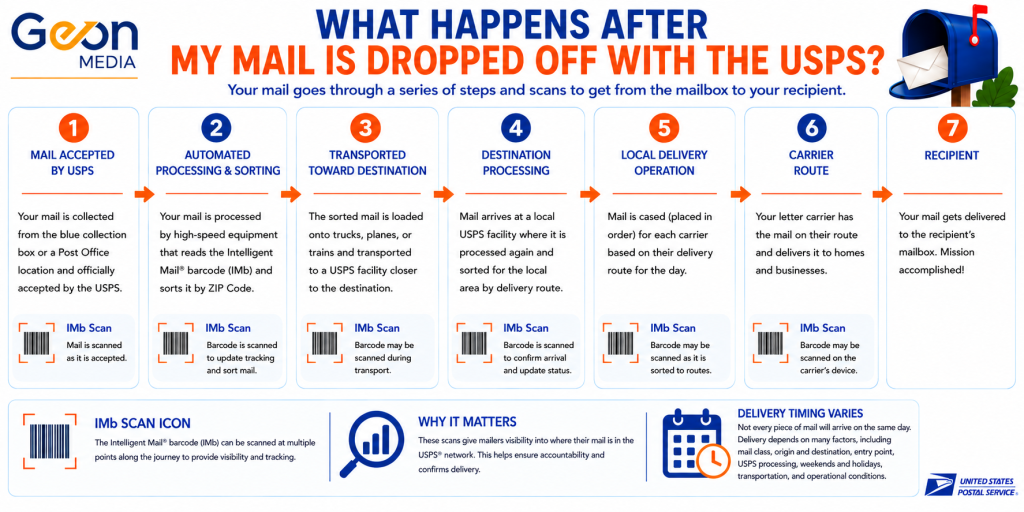
An Intelligent Mail barcode (IMb) can be put on mail that qualifies for USPS automation mail. As mail moves through USPS processing equipment, the IMb can be read to assist with identifying and routing the mail, as well as other visibility services. While the IMb is a useful tool, it is not the same as a tracking code that you might find on a UPS/FedEx envelope.
Can I Track Where My Direct Mail Is in the Delivery Process?
You’re able to gain some visibility regarding where your direct mail is to an extent. USPS Informed Visibility is a tool that can assist mailers by giving information about how portions of your mail are moving through the postal network. However, this is not the same as tracking the exact, precise location of every mail piece at any given time, or confirmation of final delivery.
Does Every Mail Piece Arrive on the Same Day?
Generally, not every piece of mail is going to arrive to its recipient on the same day. There are several variables that can have a change when the mail arrives, including:
- Mail class
- Origin and destination
- Entry point to the postal network
- USPS processing
- Weekends and holidays
- Transportation
- Operational conditions
Due to these variables being different depending on where the mail is, mail from your campaign could arrive on different days. Mailers should prepare around an approximate delivery window, rather than assuming that every recipient of your mail piece will receive it on the exact same day.
What Happens If the USPS Can’t Deliver My Mail?
If the USPS isn’t able to deliver your mail, there can be several reasons why this could happen. An address might not be updated, it could be incomplete, incorrect, or otherwise undeliverable. If this happens to a mail piece, what happens to it depends on its mail class, endorsements, and other mailing circumstances.
Does the USPS Guarantee When My Direct Mail Will Arrive?
The USPS has expected delivery timelines for different products and service standards, but many commercial direct mail campaigns shouldn’t be planned around the recipient receiving their mail on an exact date, as delays can occur. Make sure that additional time is planned in case USPS has a delay in getting your mail delivered.
Who Handles My Mail Before the USPS Receives It?
Before the USPS receives your mail, your mail pieces will need to be printed and prepared. Depending on the campaign, a lettershop or mail-service provider could handle different parts of this process, which could include printing, addressing, presorting, barcoding, and other preparation before it gets dropped off to the USPS.
FAQ
- Q: Can I track my direct mail after it gets dropped off with the USPS?
- A: Some services, such as USPS Informed Visibility can provide for some mail processing visibility, though this isn’t the same as package tracking, or confirmation of final delivery.
- Q: If USPS can’t delivery my mail, what happens?
- A: There are variables that need to be taken into consideration, such as your mail class, addressing, endorsements, and others. Not every piece of undeliverable mail receives the same treatment.
- Q: Will every mail piece from my direct mail campaign arrive at its recipient on the same day?
- A: No, not necessarily. Some mail pieces from the same campaign can arrive on different days, which could depend on the mail piece’s destination, mail class, USPS processing, transportation, its entry point, and other factors.
- Q: Does the USPS sort my mail even if it has been already presorted?
- A: Yes, the presorting process prepares and groups your mail before the USPS receives it, but the USPS will still perform additional processing and sorting as the mail moves through the different stages of delivery.
Conclusion
So, what happens after mail is dropped off at USPS? The journey of a mail piece being processed, sorted, transported, having destination operations performed, and delivered begins with the mail piece being accepted by the USPS. What the exact route is and how long the mail will take to be delivered can vary from one piece to another, even within the same direct mail campaign. Understanding what happens after your mail gets handed over to the USPS can help you to set realistic delivery expectations, plan your direct mail campaign around an approximate window of delivery, and better understand overall what visibility information might be available to you once your campaign has launched.
Return to Launching Your Campaign, or browse Geon’s Learning Center.
Recent Comments